



Best Homestay in Ziro Valley: How to Choose an Apatani Village Stay
There's a particular kind of disappointment that comes from booking a "homestay" and arriving at a hotel.
You know the one. The listing said authentic. It said family-run. It showed a photograph of an elderly woman smiling next to a fire. And what you actually got was a concrete room with a plastic bucket, a padlock, and a host who checked you in and disappeared. Nobody lied to you, exactly. But nobody told you the truth either.
Ziro Valley has genuinely extraordinary homestays. It also has rooms with the word "homestay" painted on the gate. The gap between the two is enormous, and the internet is remarkably unhelpful at explaining which is which.
So this isn't a list of names. It's something more useful: a framework for recognising the best homestay in Ziro Valley when you see one — and for walking away from the ones that only look the part.
First, Understand What You're Actually Booking
An Apatani homestay is not a hotel that happens to be in a village. It's a home, in which a family lives, into which you are being admitted.
That distinction determines everything.
In a hotel, you are a customer and the transaction ends at the door of your room. In a real Apatani homestay, you are closer to a guest — which means you'll eat what the family eats, you'll sit where the family sits, and the rhythm of your day will bend, at least somewhat, around theirs. The kitchen fire will be lit before you wake. Someone will be in the fields by seven. Dinner is when dinner is.
If that sounds like a constraint, book a hotel in Hapoli. You'll be happier.
If it sounds like the point — if the reason you're travelling to Arunachal Pradesh at all is to be somewhere that hasn't been smoothed flat for tourists — then a homestay in Ziro Valley is one of the more genuinely rewarding stays available anywhere in India.
Just book the right one.
The Apatani Context: Why This Valley Is Different
You should know what you're walking into, because it isn't ordinary.
The Apatani are an indigenous community of Ziro Valley, and their agricultural system is studied internationally — a wet-rice cultivation method integrated with fish farming, worked on terraced plots, historically without draught animals, without ploughs, and without chemical inputs. The valley has been farmed this way for generations, and the sustainability of it is not a marketing claim. It's an observable fact you can walk through.
The architecture reflects it. Traditional Apatani homes are bamboo-and-timber structures raised on stilts, with a central hearth that functions as kitchen, heating system, social centre, and — practically — the room where the household actually lives. If you sleep in a genuine Apatani home, you will sleep in a building that was designed by the same logic that designed the fields.
The Apatani Cultural Landscape has been recognised for its significance and features on India's tentative list for UNESCO consideration — please verify current status before citing it as a designation, as this is precisely the kind of detail that gets overstated in travel copy.
The point stands regardless: this is not a generic mountain village. Choosing to stay in an Apatani home is choosing to be inside one of the more remarkable living cultural systems in the subcontinent.
The Six Tests: How to Identify the Best Homestay in Ziro Valley
Here is the framework. Apply it to any listing, ours included.
Test 1 — Does a family actually live there?
The single most important question, and the one nobody asks.
Some "homestays" in Ziro are buildings the owner used to live in, now let out room-by-room, with the family residing elsewhere. That's a guesthouse. It might be perfectly comfortable. It is not a homestay, and you should not pay a homestay premium for the story of one.
Ask directly: Will the family be present during my stay? Will I be eating with them?
Vague answers are answers.
Test 2 — Is the food from the household kitchen?
A real Apatani homestay feeds you from the same kitchen that feeds the family. That means local food — rice, seasonal greens, bamboo shoot, smoked or fresh fish from the paddy system, and if you're fortunate, apong, the indigenous rice beer.
If the "homestay" offers a menu, or asks whether you'd prefer continental breakfast, you have found a small hotel.
The best homestay in Ziro Valley does not have a menu. It has a meal.
Test 3 — Where is it, really?
Ziro Valley is a scatter of Apatani villages — Hong, Hari, Hija, Bamin-Michi, Bulla, Dutta — plus Old Ziro and the town of Hapoli, which sits roughly 10–11 km from the festival grounds.
"Homestay in Ziro" is a phrase that could mean any of these, and the practical difference between them is very large.
| Location | Character | Distance to Festival Grounds |
|---|---|---|
| Apatani villages (Hong, Hari, Hija, etc.) | Genuine village life, traditional architecture, agricultural rhythm | Varies significantly by village |
| Old Ziro | Quieter, older settlement, cultural texture | Moderate |
| Hapoli | Town — shops, hotels, connectivity | ~10–11 km |
If you're coming for the culture, the villages are the answer. If you're coming for the Ziro Music Festival, distance to the grounds becomes the deciding variable — and this is where many homestay bookings quietly go wrong. More on that below.
Test 4 — What are the actual facilities?
Be honest with yourself about your tolerance, and demand honesty from the listing.
Genuine village homestays in Ziro range from simple but perfectly comfortable to genuinely rustic. Things worth confirming before you book, rather than discovering on arrival:
- Bathroom — attached or shared? Western or Indian? Hot water, and how (geyser, bucket, or hope)?
- Bedding — is it warm enough for a valley that drops into single digits at night?
- Electricity — supply in Ziro can be intermittent. Assume it will be.
- Connectivity — mobile network is patchy across the valley. Wi-Fi is a bonus, not a baseline.
- Heating — often the hearth. Which is wonderful, and is also not a radiator.
None of these are dealbreakers. All of them are dealbreakers if you find out too late. A good homestay tells you all of this before you book. A bad one lets you assume.
Test 5 — Does the money reach the family?
This is the ethical test, and it's also, conveniently, the quality test.
A significant share of Ziro homestay bookings pass through aggregators and agents who take a margin off the top. The family that cooks your food, lights your fire, and gives up a room in their own home often receives a fraction of what you paid.
That isn't just unfair. It's degrading — in the literal sense. Homestays that earn little have little reason to maintain quality, and the whole model erodes.
Book direct, or book through an operator with a genuine, direct relationship with the household. Ask who you're actually paying. The answer tells you a great deal.
Test 6 — Is anyone accountable if it goes wrong?
Village homestays are wonderful and they are also, occasionally, unpredictable. A host falls ill. A road is blocked. A room floods. Ziro is a mountain valley in monsoon-adjacent September, and these things genuinely happen.
If you booked through a listing platform, you have a support ticket. If you booked through a direct operator with people on the ground, you have a person.
At 11 PM in a valley with patchy signal, the difference between those two is not academic.
The Festival Question: Homestay or Camp for Ziro Festival 2026?
This deserves its own section, because it's where most people get it wrong.
If you're travelling to Ziro specifically for the Ziro Music Festival, the homestay decision is not really about the homestay. It's about distance.
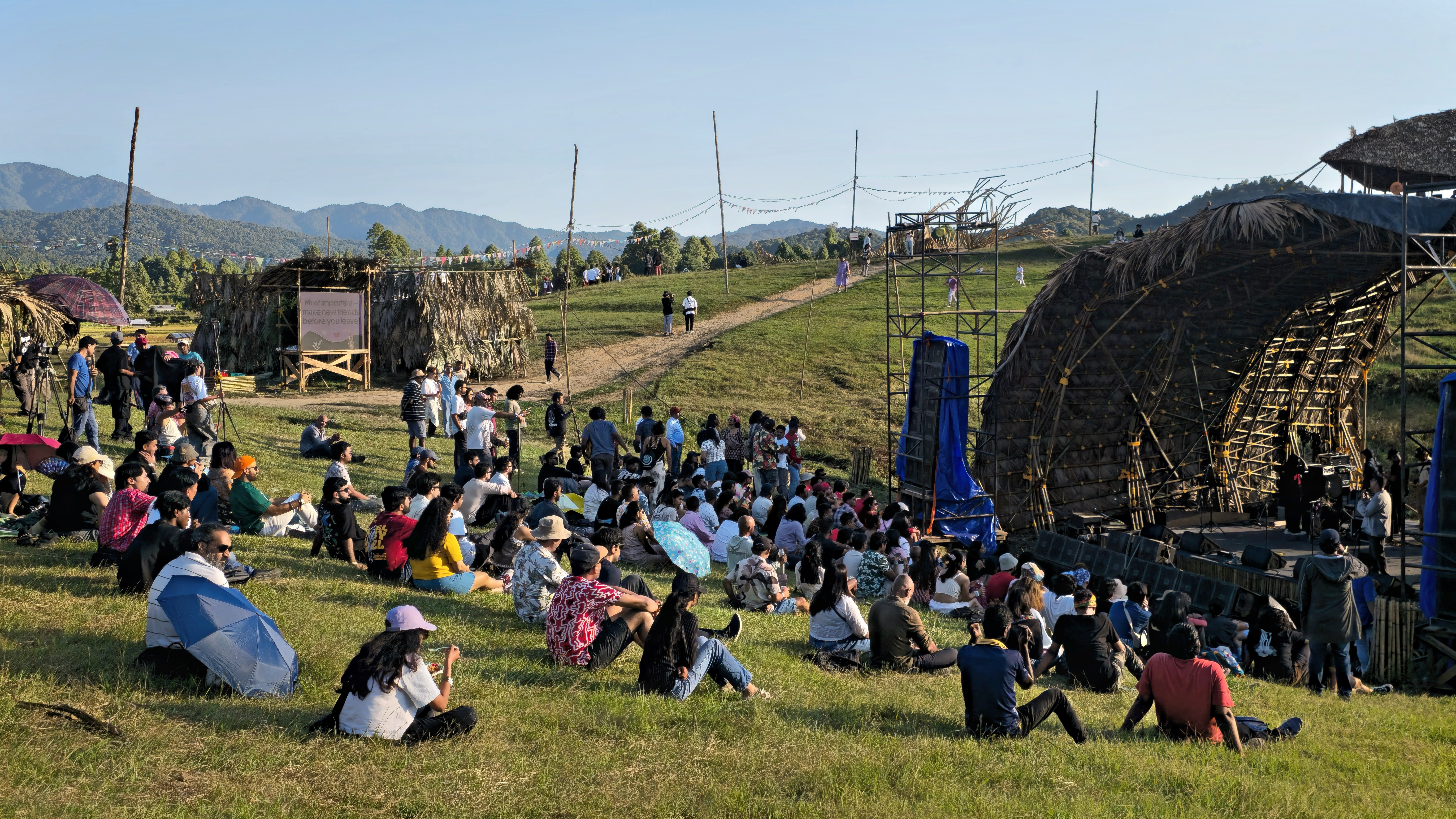
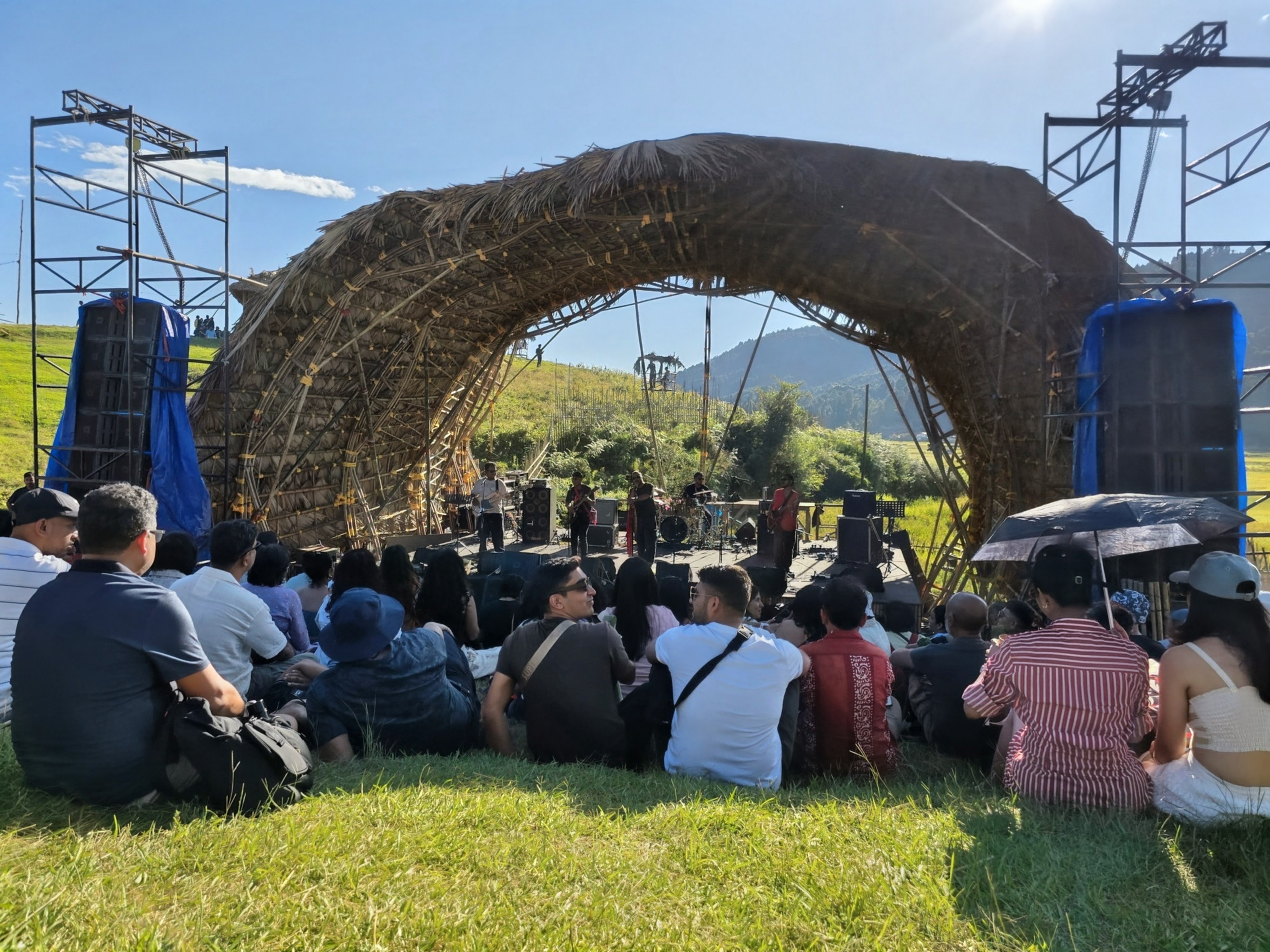
The festival grounds sit out in the open valley. A homestay in a distant Apatani village — however beautiful — means arranging transport to the grounds and, more painfully, arranging transport back at 1:40 in the morning when the last set ends, the temperature has dropped to single digits, and the shared Sumo is a matter of faith rather than schedule.
Do the maths. Two round trips a day, 35 minutes each way, across four days: roughly nine hours in a vehicle. That's an entire festival day, spent commuting.
So, plainly:
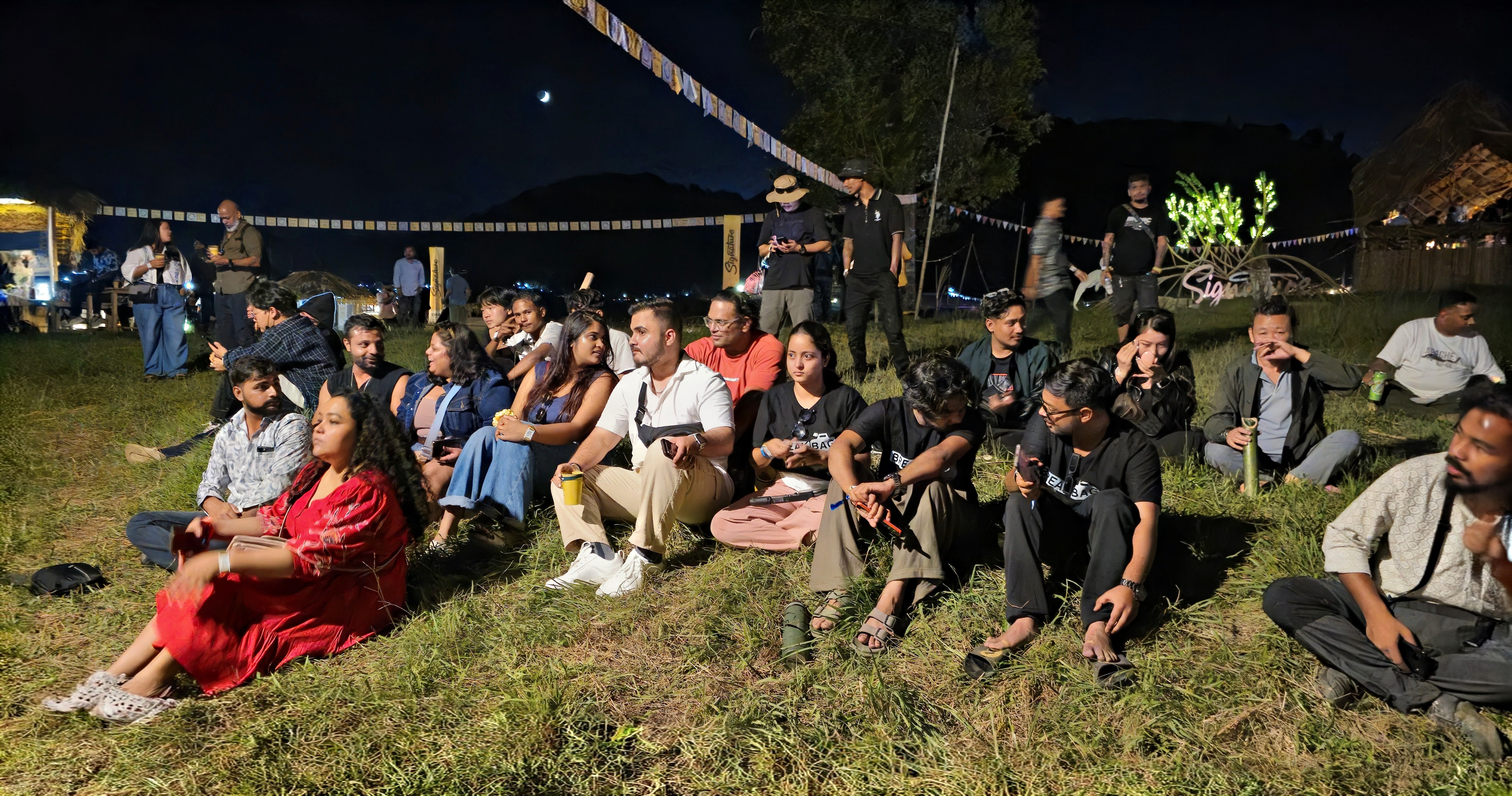
- Choose a camp if the festival is the point. You want to be inside it — walking back under the pines at 2 AM, camp hopping in the afternoon, going back for the encore because you can. The nearest camp from Ziro Music Festival grounds solves the transport problem by deleting it. (We run one: Ziro Camps by BreakBag.)
- Choose a homestay if the valley is the point. You want to wake in an Apatani kitchen, understand the rice-fish system from someone who works it, sleep under a solid roof rather than canvas, and experience Ziro as a place rather than a lineup. The festival becomes something you visit, rather than something you live inside.
- Or do both. Camp for the festival nights. Homestay for the days on either side. Honestly, this is the correct answer for most people who can afford the extra nights, and it's the itinerary we'd recommend if you asked us over a coffee rather than a booking form.
Red Flags: When to Walk Away
Some listings tell you what they are, if you're reading properly.
- No photographs of the actual interior. Exterior shots and stock valley landscapes are hiding something.
- "Attached bathroom, hot water, TV, Wi-Fi" as the headline features. Nothing wrong with any of these — but if they're the selling point, you're being sold a hotel.
- A menu. See Test 2.
- No mention of the family. A homestay listing that never names or describes its hosts is not confident about them.
- Vague location. "In Ziro" is not a location. Ask which village.
- Festival-week price with no festival-week clarity. Ziro pricing during festival week is a different market. Get the number in writing.
- Nobody to call. If your only recourse is a chat interface, you have no recourse.
What a Good Ziro Homestay Actually Feels Like
Since we've spent a lot of words on how to avoid the bad ones, here's the thing you're actually chasing.
You wake early because the house wakes early. There is smoke, and the specific smell of a hearth that has been burning since before dawn. Someone is already back from the fields, or on the way out to them. Breakfast is rice, or something with bamboo shoot in it, and it is served without ceremony because you are not a guest being catered to — you are simply someone who is here.
Outside, the paddy terraces run flat across the valley floor to the pine ridges. If it's September, they are heavy and gold and about to be harvested. Fish move in the flooded channels between the rice, which is a thing you have to see to properly believe.
Later, someone will explain the field system to you, and it will be immediately obvious that they are not reciting a tourist script. They are describing their job.
At night it is cold and very quiet, and you will sleep better than you have in months.
That's the best homestay in Ziro Valley. Not a facility. A frequency you tune into for a few days.
Booking With BreakBag
We operate in Ziro directly — no aggregators, no chain of agents, no margin stack between your payment and the ground.
That matters for homestays specifically, because it means:
We know the households. Not a database of listings. Actual relationships, built over repeat seasons.
The money reaches the family. Directly, and at a rate that makes the homestay worth running properly.
Someone is accountable. A trip coordinator on the ground and 24-hour support — a person, in the valley, when something goes sideways.
We'll tell you honestly if a homestay is the wrong call. If you're coming primarily for the Ziro Music Festival and asking us for a village homestay, we'll say what we said above: the camp is probably the better decision, and here's why. We'd rather you have the right trip than the trip that suits our inventory.
Package Reference: Ziro Festival 2026
For those combining a valley stay with the festival, here's where our packages start:
| Departure | Duration | From |
|---|---|---|
| Naharlagun / Itanagar | 4N / 5D | ₹17,500 |
| Guwahati | 5N / 6D | ₹17,999 |
| Dibrugarh | 4N / 5D | ₹23,500 |
"You don't book an Apatani homestay. You're admitted to one."
Looking for a hassle free trip?
Connect with our experts! Get the best Itineraries and Offers!