


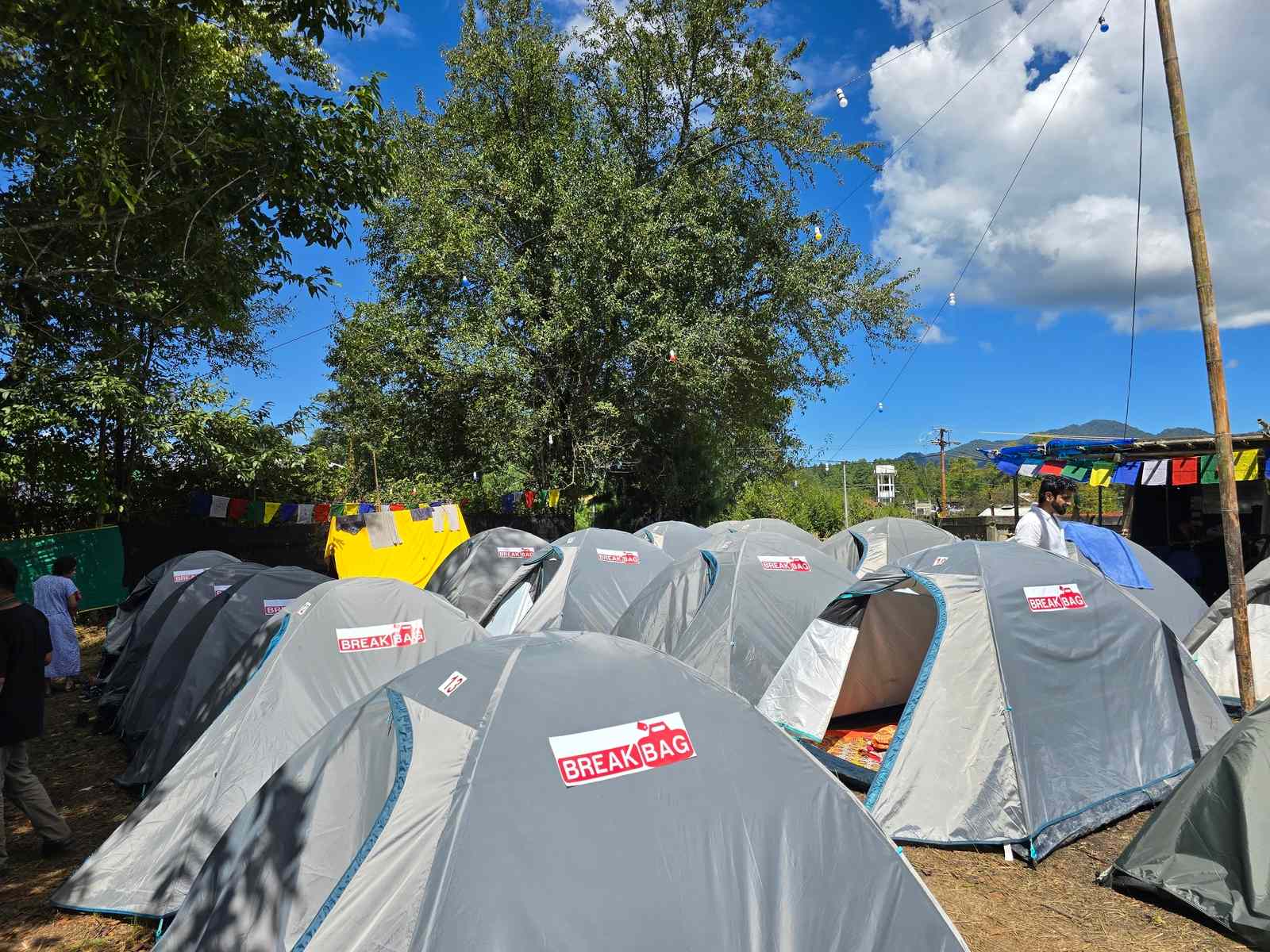
Camping in Ziro: Waking Up Inside a Music Festival on a Rice Field
The zip of a tent flap at 6 AM. Cold air, the kind that smells of wet earth and woodsmoke. You step out and the whole valley is under mist — paddy fields, bamboo stages, a few hundred other tents, all of it soft-edged and silent before the music starts again. Someone two tents down is boiling water for chai. This is camping in Ziro, and there's nothing else in India quite like waking up inside a music festival built on a rice field.
Most people arrive thinking the festival is the stages and the lineup. Then they spend a night in a tent under an Arunachal sky and realise the camping is the festival — the fire circles, the strangers who become friends by day two, the walk back across the field with the bass still in your chest. Camping in Ziro isn't a budget compromise. For a lot of people, it's the whole reason to come.
Here's what it's actually like, and how to do it right.
Why Choosing the Best Camp in Ziro Festival Makes or Breaks Your Trip
Ziro Valley is small. Beautiful, but small. For the four days of the festival — 24 to 27 September 2026 this year — a few thousand people land in a handful of Apatani villages that usually see almost no one. There's no hotel chain. There's no ride-hailing app. There's a limited number of places to sleep, and the good ones go months ahead.
So when it comes to camping in Ziro, the choice isn't "which tent looks nicest in the photos." It's how close you are, how warm the setup is, and whether someone has your back when the mountain misbehaves — because it will. A road slips after rain. A path turns to slush. Signal drops.
The best camp in Ziro Festival is simply the one you can walk home to at midnight, half-deaf and happy, without thinking about a cab. Everything else you can live with.
A bad night looks like this: you booked a spot 6–7 km out in Hapoli town, it's fine, but you're leaning on shared Sumo cabs that stop running early. You miss the late acoustic sets — which, ask anyone who's been, are the best part — and you spend more of Ziro commuting than dancing.
A good night looks like this: you unzip the tent, walk ten minutes across a drained paddy field, and you're at the Danyi Stage. You go back for a jacket whenever you feel like it. You nap in the afternoon, catch a second wind, and stay out till the fire dies.
That gap — commuter versus camper — is the difference between seeing Ziro and living it.
Nearest Camp from Ziro Music Festival: Why Walking Distance Wins
Let's say it straight: the nearest camp from Ziro Music Festival beats a nicer room far away, every single time. Every Ziro veteran will tell you the same.
The grounds sit in the paddy fields below the main village cluster. The camps that matter are pitched right at the edge of the fields or a short climb up the slope — close enough that the music is your alarm and your lullaby. Being the nearest camp in Ziro Valley to the stages buys back the one thing a four-day festival never gives you enough of: time actually on the ground.
Why does walking distance win so completely when you're camping in Ziro?
Because Ziro runs late. The billed acts play into the night, but the real magic is after — the impromptu jams, the guitar that appears at the bonfire, the unknown singer who turns out to be extraordinary. Dependent on a cab, you leave before all that. A field away in your tent, you stay.
Because the weather turns fast. Late September is post-monsoon. Days are idyllic — low 20s, golden light — but evenings bite and rain arrives without asking. A five-minute walk to your tent beats a shivering wait for a shared vehicle in the drizzle.
Because you'll need to rest. Four days on your feet is a marathon. The people still standing on the last night are the ones who could slip back to the tent in the afternoon, nap, and return fresh. That's only possible when you're camped close.
Which is exactly why we pitch where we pitch.
Ziro Camps by BreakBag — Your Best Camp in Ziro Valley
We're BreakBag. We've spent over a decade sending Indian travellers into the Northeast — not as a booking website, but as a ground operator with our own contracts, our own people, and our own tents. No middleman skimming a cut and handing you a phone number to sort things yourself.
Ziro Camps by BreakBag is built to be the best camp in Ziro Valley for one plain reason: it's close, and it's ours. We're not reselling somebody else's plot. Our trip coordinator is on the ground with you the whole time, our village guide is Apatani, and if a road washes out, we're the ones fixing it — not a call centre in another state.
Here's how camping in Ziro with us actually runs. You travel with us from Guwahati — flight in, then the scenic overland leg up into the valley. We sort your Inner Line Permit (mandatory for Arunachal — more below). We check you into camp, feed you dinner the first night, and by the time your bag's down you're already at the grounds.
We run from three gateways — Guwahati, Naharlagun/Itanagar, and Dibrugarh — so you pick the route that matches your flights. The Guwahati package folds in the train leg up to Naharlagun through Assam's tea country, which is a genuinely lovely way to arrive.
Across four nights you're not just sleeping in a tent. You're on the Apatani village walk, seeing how a tribe has farmed these fields sustainably for centuries. You're watching paddy-field fishing, a technique you won't find anywhere else in India. You're trying the local rice wine. And every night you're back at the bonfire under a sky thick with stars.
Inside the Camp: Dome Tents, Bonfires & Campsite Amenities
Let's be clear about what camping in Ziro actually gets you, because "camping" means different things to different people and I don't want you picturing the wrong thing.
The tents are weatherproof dome tents on a double-sharing basis. Not the flimsy sort that folds in a shower — proper domes that hold up to Ziro's post-monsoon moods. You share with one other person: come as a pair and you're sorted, come solo and we pair you, which is how half the friendships at Ziro begin.
Now the honest bit about campsite amenities: this is a festival in a remote valley, not a resort. Washrooms are shared and kept clean. Hot water is arranged but not on tap around the clock — it's the mountains. Charging points exist, but bring a power bank anyway, because everyone's charging at once and you don't want to miss a set hunting for a socket.
What you do get, reliably:
A bonfire every night (weather permitting — even Ziro can't promise the sky). This is the heart of camp life. It's where the day's music gets pulled apart, where a guitar always turns up, where the rice beer comes out.
Daily breakfast and dinner, included — warm, simple, local food, the kind you crave after a long day standing. (Only day-one breakfast isn't included, because you're travelling in.)
A 24-hour trip coordinator and a local Apatani guide for the village tour — someone who genuinely knows the valley, not a script.
Pack properly: a light jacket for the evenings, rain gear including gumboots (Hapoli's market sells them cheap if you forget), a hat for the harsh midday sun, and a sturdy water bottle. Layer up. Warm days, cold nights.
Comfortable enough to rest, rough enough to feel real. That's the Ziro camping sweet spot, and we lean into it rather than sanding it smooth.
Ziro Festival Camping vs Homestay: Which Stay Suits You?
Camping isn't for everyone. Let's be honest about it.
Camping in Ziro wins if: you want to be closest to the action, you're up for the late nights, shared washrooms don't faze you, and a field of tents with a fire at the centre sounds like the right home base. Most people at Ziro camp — and most are glad they did. It's the full-immersion choice.
A homestay wins if: you want a private room and a solid roof, you're travelling with someone who needs a gentler setup, or four nights under canvas simply isn't your thing. Staying with an Apatani family has its own rewards — home cooking, a real window into village life, a quieter sleep. The trade-off: you're usually a little further out and leaning on shared transport for the late sets.
There's no wrong answer here — just the one that fits you. If you're weighing it seriously, we've written a full breakdown of the best homestays in Ziro Valley so you can compare like for like.
My honest take, having done both? First-timers who came for the music should camp. You'll kick yourself commuting while the field glows. Save the homestay for the return trip, when you know the valley and want to slow it down.
Ziro Camping Package Cost & What's Included
Here's the part everyone scrolls for, so no fluff.
The BreakBag Ziro Festival 2026 package from Guwahati starts at ₹17,999 per person for 5 nights / 6 days, double sharing. That covers your train journey from Guwahati to Naharlagun, four nights camping in Ziro (dome tent, double sharing), daily breakfast and dinner (bar day-one breakfast), all station transfers, the Apatani village experience, wine tasting, paddy-field fishing, a local guide, a trip coordinator, GST, and the bonfire nights.
Coming via Dibrugarh instead? That package starts at ₹23,500 per person for 4 nights / 5 days.
One thing people miss — and I'd rather you hear it from us: the festival pass is not included in the package price. A 4-Day Festival Pass runs around ₹9,000 and you book that directly through the official Ziro Festival ticketing site. We handle travel, stay and experiences; the festival handles admission. Keeping the two apart keeps our price honest.
Also not included: the optional Ziro Valley sightseeing (₹500 per person for the lakes — Siikhe, Seeh — and the local sights), entry fees to those spots (₹100–200), the gratitude fee for the Apatani village visit, and anything nature throws at the schedule.
For the full itinerary and other departure cities, see our Ziro Festival tour packages page — everything's laid out route by route.
Fair price, real inclusions, no surprises at the campsite gate. That's the deal.
How to Book Your Ziro Festival Camp (Before It Sells Out)
Now the honest urgency, because I won't pretend it isn't real.
Ziro has a hard ceiling on beds. The valley is small, the good camps are limited, and every year the closest pitches go first. Book in July or August and you get the best spots. Wait until September and you're choosing from what's left — or paying more for a room in town and commuting in.
If you're serious about camping in Ziro — and about being close to it — here's your one clear next step:
Enquire with BreakBag now, lock your dates, and let us handle the rest — the tent, the permit, the transfers, all four days. We'll tell you honestly what's still open and what's filling fast. No pressure, no hard sell. Just a straight answer from the people who'll be on the ground with you.
Four days. One valley. A field full of music and a tent you can walk home to.
Camping in Ziro is the rare kind of night where the music doesn't end — it just moves to the fire, and your tent is only a field away.
Thinking about camping in Ziro for 2026? The closest pitches go first — usually by August. Enquire with BreakBag about our Ziro Festival 2026 trip and we'll tell you honestly what's still open, sort your tent, permit and transfers, and save you a spot by the fire. One message starts it.
Looking for a hassle free trip?
Connect with our experts! Get the best Itineraries and Offers!