The first thing you notice isn't the music. It's the cold that slips into your tent around 4 a.m., the kind that makes you pull the sleeping bag up to your chin — and then, somewhere across the paddy field, someone starts tuning a guitar in the dark. You unzip the flap. Mist is sitting low over the rice terraces, the pine ridges are just turning from black to grey, and you realise you're wide awake and grinning at nothing. That's camping in Ziro in one sentence: you come for the lineup, and you fall in love with the mornings.
Most people who make it to the Ziro Music Festival could afford a hotel room somewhere in Hapoli town. They choose the tent anyway. This is why.
Why Camping in Ziro Beats Every Other Way to Do the Festival
Here's the honest logistics of it. Ziro Valley has almost no hotels, and the homestays are scattered across villages far from the stages. Rooms sell out months ahead, and even when you find one, you're looking at a taxi ride back and forth every night — which, after a full day of music and a few bamboo mugs of rice beer, is nobody's idea of fun.
The campsites, on the other hand, sit roughly one kilometre from the festival grounds. You walk. That's the whole appeal. You stumble out of the last set, follow the string lights back to camp, and you're horizontal in ten minutes.
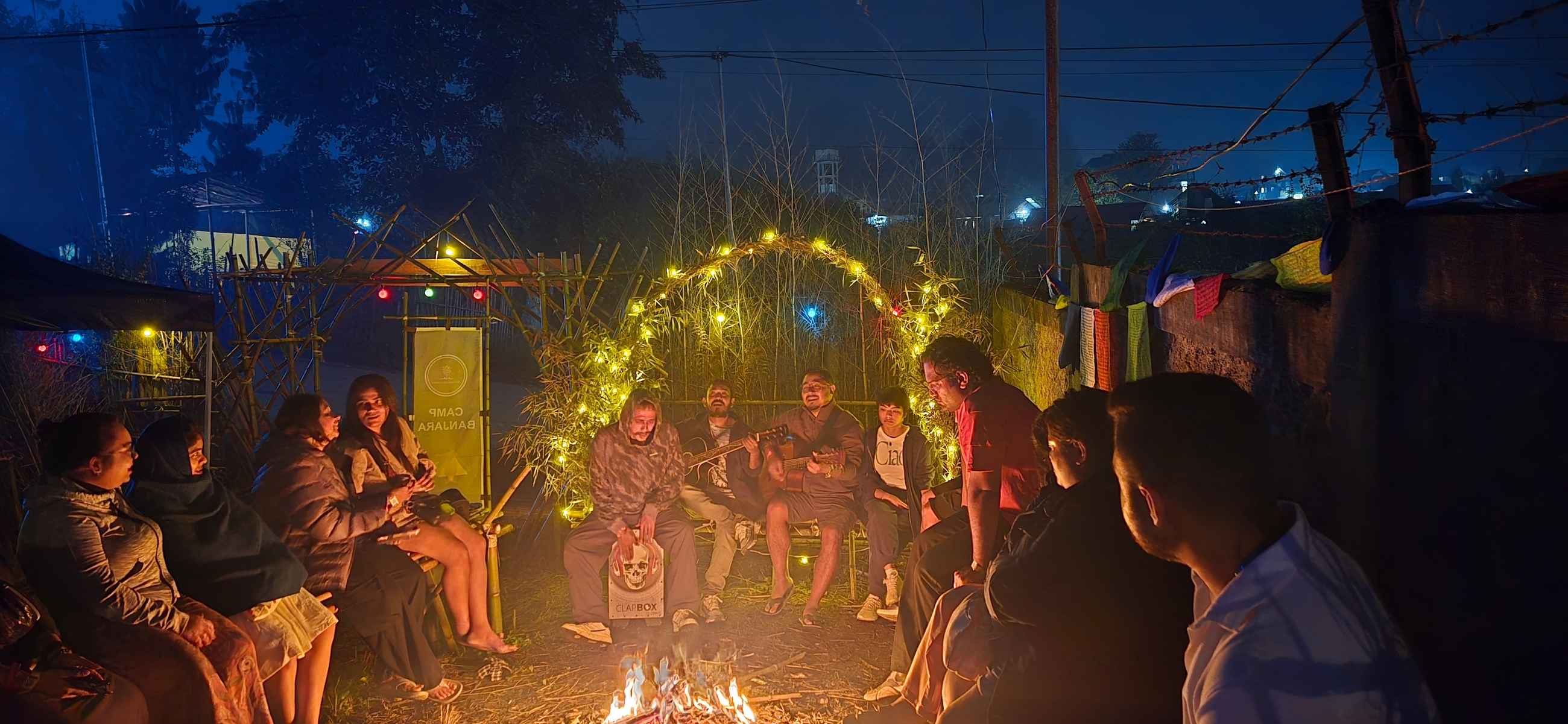
But the real reason isn't convenience. The campsite is where the festival actually lives after 10 p.m. The Danyi and Owlo stages go quiet, and the tents come alive — someone's got a guitar, someone else knows the harmony, and there's a bonfire that strangers keep feeding until sunrise. You meet people from Bangalore, Delhi, Guwahati, a couple who flew in from Berlin. By day two nobody's a stranger.
If you want to watch Ziro, book a hotel. If you want to be inside it, you camp.
Ziro Campsite Tents & Dome Tent Stay: What You Actually Sleep In
Let's kill the fear first, because a lot of first-timers picture themselves shivering in a leaky sheet of nylon. The reality is far more sorted than that.
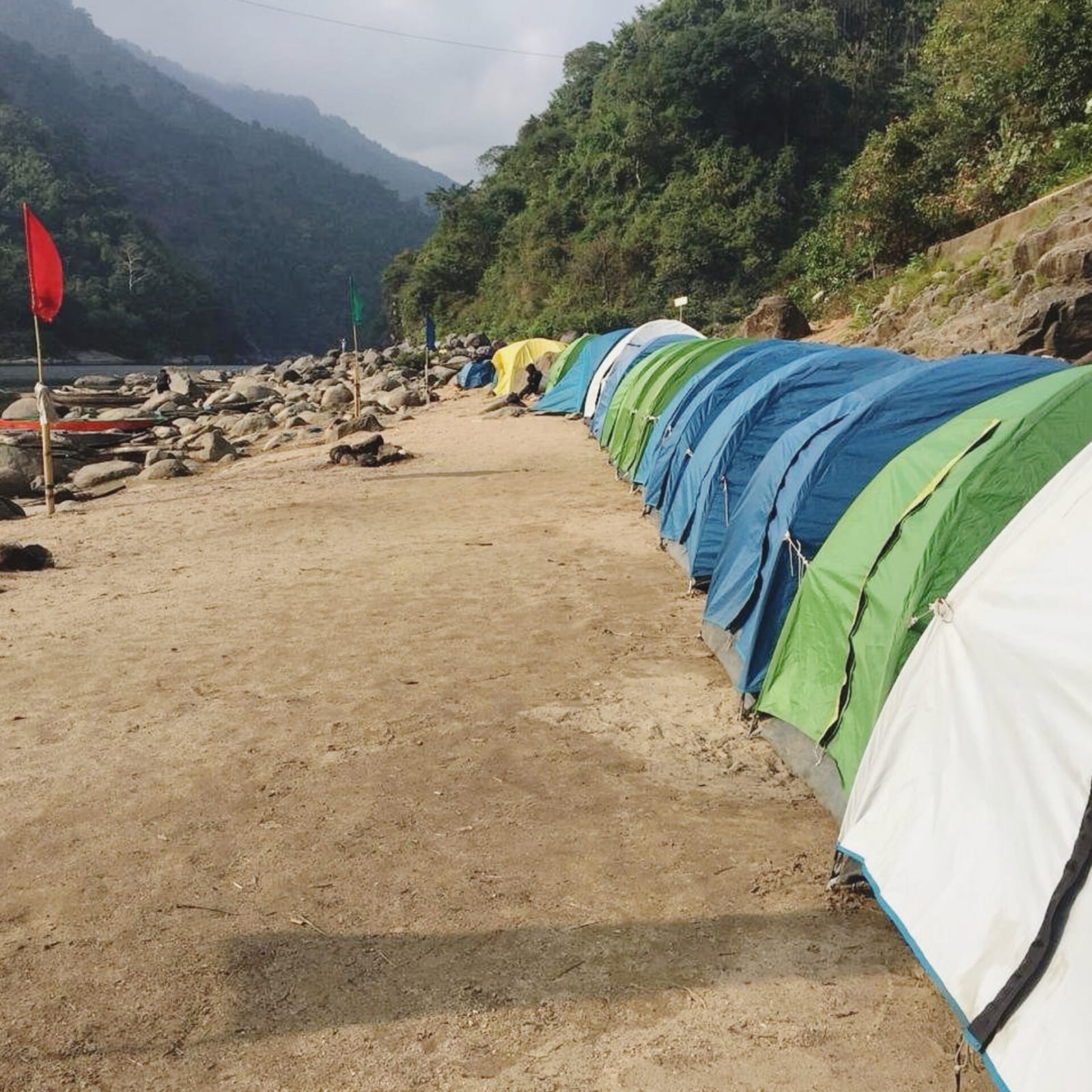
Most organised campsites run twin-sharing dome tents or alpine tents — proper rainproof shells, not festival-market flimsy. A standard Ziro campsite tents / dome tent stay setup gives you a sleeping mat, a pillow, and usually a sleeping bag rated for the cold. Ask before you book whether bedding is included; the good operators list it plainly.
What the better camps get right is the stuff around the tent. Charging points at fixed times (the valley's power is honest but not endless), clean toilets and washrooms kept usable through the crowd, a first-aid kit on site, and someone actually running the place at 2 a.m. if you need them.
A detail worth knowing: solo travellers usually get gender-segregated tent allocation, so a woman travelling alone isn't sharing canvas with three men she met that afternoon. It's a small thing that makes a big difference to who feels safe coming here alone — and plenty do.
Bamboo is everywhere. The lounges, the machang platforms you sprawl on to watch the stars — built from locally cut bamboo, same as the stages. It's not decor. It's just how Ziro builds.
Best Campsite in Ziro: How to Pick the One That Fits You
There's no single best campsite in Ziro — there's the one that matches how you travel. A few things separate the good from the forgettable:
Distance to the grounds. Everything within about a kilometre is walkable. Read the fine print — some cheaper camps sit further out and quietly assume you'll arrange your own ride.
Who else is there. Some camps are loud, jam-till-dawn, party-first. Others keep it mellow for people who want to sleep before 2 a.m. Neither is wrong. Know which one you are.
What's actually included. A tent is a tent. The difference is in bonfires, morning chai, village walks, and whether transfers are bundled in. This is where a Ziro Festival camping package earns its price — the honest ones tell you exactly what's covered before you pay.
Whether they've done this before. Ziro fills up hard for four days a year. Operators who've run camps here for years handle the crush — check-ins, power cuts, a sudden downpour — far better than someone setting up for the first time. Ask how long they've been on the ground.
Ziro Camping Weather & September Nights: Pack for Two Climates
This is the part people underestimate, and it's the part that quietly ruins trips.
Ziro in late September is a valley living two different days at once. Afternoons are gentle — daytime temperatures sit in the early 20s Celsius, warm enough for a t-shirt on the grass, and the sun can actually get sharp, so a hat isn't a bad shout. Then the sun drops behind the ridge and the valley turns. Nights get genuinely cold — you'll want layers you didn't think you'd need.
And it's the tail end of the monsoon, so rain shows up without a warning. Not always, but often enough that you plan for it.
Here's what the ground reality asks you to carry:
- Layered clothing — a warm jacket or fleece is non-negotiable for the Ziro camping weather / September nights combination. The afternoon lies to you; the night tells the truth.
- A raincoat, not an umbrella — you'll have both hands full.
- Gumboots. The paddy fields turn to mud after rain, and everyone who skipped these regrets it by day two. If you forget them, Hapoli's market sells rainwear and boots cheap.
- A power bank. Charging points exist but they're shared and time-slotted. Network coverage is patchy too — plan to be a little off-grid.
- Cash. ATMs in the valley are few and run dry during the festival. Local food, market stuff, transfers — bring notes.
Get the packing right and Ziro is paradise. Get it wrong and you're the person buying gumboots in the rain.
The Ziro Festival Camping Experience: A Day and a Night in the Valley
Let me walk you through what the rhythm actually feels like, because the Ziro Festival camping experience isn't the schedule on paper.
Mornings are yours. The festival doesn't crank up till afternoon, so you wake slow — tea in hand, mist burning off the terraces, the smell of woodsmoke and wet pine. This is when people walk into the Apatani villages nearby, watch a way of farming that hasn't changed in centuries, or just sit on the grass and do nothing beautifully. Some ride a cycle out to the Tarin fish farm; some trek up to Hakhe Tari.
Afternoons belong to the stages. You walk the kilometre to the grounds, find a knoll of paddy field to sit on, and let the indie acts roll — over 40 of them across the weekend, regional folk to global names, all on bamboo stages with mountains behind them. Rice beer in a bamboo mug. Momos from a stall. The valley glowing gold.
Nights are the whole point. The main stages wind down and the campsite takes over. Bonfire. Guitars. New friends who'll be old friends by Sunday. You look up and there are, genuinely, a ridiculous number of stars.
Then the cold creeps in around 4 a.m., someone starts tuning a guitar in the dark, and you're back where this blog started.
That loop — four times over — is Ziro. You don't attend it. You live in it for a weekend.
In Ziro, you don't check into a place to sleep — you unzip a flap and step straight into the middle of everything.
camping-in-ziro
Ziro's tents fill up months before the first note plays — and once the good campsites are gone, they're gone. BreakBag runs its own camp on the ground here, no middlemen between you and the valley. Tell us which city you're flying from and we'll sort your tent, transfers, permit, and festival pass in one go. [Enquire about a BreakBag Ziro Festival 2026 trip →]