


Hornbill Festival 2026: The Complete Guide to Nagaland's Festval of Festivals
There's a sound you'll never forget once you've heard it. It starts low — a single log drum, deep in the misty hills of Nagaland — and then another joins, and another, until the whole ground seems to pulse with it. Warriors in feathered headgear move in rhythm, spears catching the winter light, and somewhere behind you the smell of smoked pork and rice beer drifts out from a bamboo hut. This is the Hornbill Festival, and no photograph, no video, no travel article — including this one — quite prepares you for standing in the middle of it.
If you've been dreaming about Nagaland's "Festival of Festivals," this guide is everything you need to know before you go: when it happens, how to get there, the permit you can't skip, where to stay, what to eat, and how to make ten days in the Naga hills the trip of a lifetime.
Planning your trip properly is essential—read our complete Nagaland travel guide for Hornbill Festival 2026 covering permits, routes, and insider tips.
What Is the Hornbill Festival, Really?
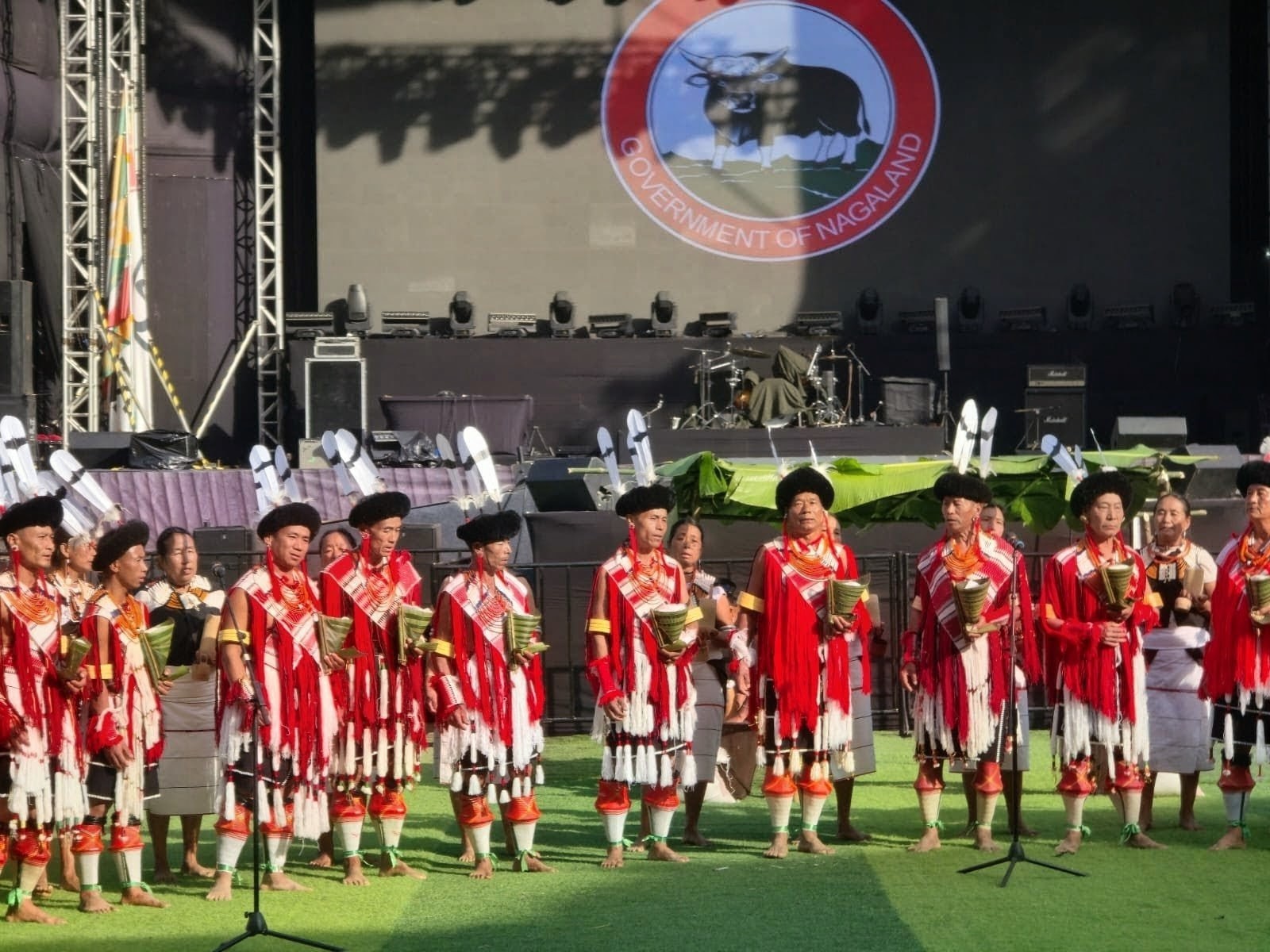
The Hornbill Festival is Nagaland's flagship cultural celebration — a ten-day gathering where all of the state's major Naga tribes come together in one place to share their dances, music, food, crafts, and traditions. It's held every year at the Naga Heritage Village in Kisama, and it's earned its nickname, the "Festival of Festivals," honestly: it takes what would normally be dozens of separate tribal celebrations and packs them into a single, unforgettable window.
The festival was started by the Government of Nagaland back in 2000, with a simple but powerful idea — to protect and promote Naga heritage, and to bring the tribes together in celebration rather than let their traditions quietly fade. It's named after the hornbill, the large forest bird woven deep into Naga folklore, whose feathers once crowned the headgear of warriors as a mark of honour and courage.
What makes it special isn't just the scale. It's the authenticity. The dances aren't staged for tourists — they're the real thing, rooted in generations of tradition. When you watch a war dance at Hornbill, you're watching something that means something to the people performing it.
The Hornbill Festival is officially organized by the Government of Nagaland as a flagship cultural initiative to preserve and promote the rich tribal heritage of the state. For official updates and event details, travellers can refer to the state’s tourism platform.
When Is the Hornbill Festival?
Here's the good news for planning: the Hornbill Festival dates are fixed every single year — December 1 to December 10. They don't shift with the moon or change from year to year, so you can plan well ahead. The Hornbill Festival 2026 runs from December 1 to 10, 2026, at Kisama, just as it always does.
The opening day, December 1, is deliberate — it coincides with Nagaland's Statehood Day, which gives the first day of the festival an extra layer of pride and ceremony. And while ten days is the full run, you don't need all ten to experience it. Most travellers find that two to three days at the festival grounds, paired with a couple of days exploring the surrounding villages, hits the sweet spot.
One tip from experience: the opening days and the middle weekend draw the biggest crowds. If you'd rather have a little more breathing room, the early weekdays can feel more relaxed while losing none of the magic.
The festival is hosted at the iconic Kisama Heritage Village, located just outside Kohima, offering a centralized platform for all tribal performances and exhibitions.
Where Is the Hornbill Festival Held?
The festival takes place at the Naga Heritage Village in Kisama, about 12 kilometres south of Kohima, Nagaland's capital, set between the villages of Kigwema and Phesama. It's a purpose-built heritage village, and it's genuinely clever in its design: each major Naga tribe has its own morung — a traditional carved wooden dormitory — decorated with the tools, weapons, textiles, and food of that community.
Walking from one morung to the next is like walking through the whole of Nagaland in an afternoon. You can taste one tribe's rice beer, watch another's folk wrestling, and buy a hand-woven shawl from a third, all within a few hundred metres. During the festival, Kisama stops being a museum and becomes a living, breathing village.
How to Reach the Hornbill Festival
Getting to Nagaland takes a little effort — and that's part of what keeps it special. Here's how the journey usually works:
- By air: Dimapur Airport (DMU) is Nagaland's only civil airport and your main gateway. It connects to Kolkata, Delhi, Guwahati, and Chennai. From Dimapur, it's a scenic road transfer up into the hills toward Kohima and Kisama. (Do book flights early for December — festival season pushes fares up as the dates approach.)
- By train: Dimapur Railway Station links to major cities, though the journeys are long — roughly 24 to 28 hours from Kolkata, and around 40 hours from Delhi. Best for those who love the slow-travel romance of a long rail trip.
- By road: From Dimapur, it's a comfortable drive up to Kohima and on to Kisama. Many travellers base themselves in a village like Kigwema, right beside the festival grounds, so the daily trip to Kisama is short and easy.
For travellers preferring rail connectivity, the nearest major railway station is Dimapur Railway Station, which is well-connected to key Indian cities such as Guwahati and Kolkata. Visitors can check real-time schedules, routes, and seat availability through the official Indian Railways portal for seamless travel planning.
The One Thing You Can't Skip: The Inner Line Permit (ILP)
This is the single most important piece of planning, so don't leave it to the last minute.
Every Indian citizen who isn't a resident of Nagaland needs an Inner Line Permit (ILP) to enter the state. It's not optional and you won't talk your way past the checkpoint without one. The good news: as of 2026, the process is fully online and genuinely quick.
Apply through the official portal at ilp.nagaland.gov.in. You'll need a valid government photo ID (Aadhaar, Voter ID, Passport, or Driving Licence) and passport-size photos. Tourist applications are often approved within a few hours if you apply during working hours, and the tourist ILP is typically valid for 15 to 30 days — plenty for a festival trip. Apply a week or two before you travel to be safe.
Foreign travellers: the rules differ for you. Foreign nationals need a Protected Area Permit (PAP) and must register with the local authorities on arrival — though in recent years the government has relaxed the PAP requirement specifically for the ten festival days. Because these rules change year to year, always confirm the current position on the official Nagaland tourism and FRRO portals before you book.
Visitors planning a trip to Nagaland must obtain an Inner Line Permit (ILP), which is mandatory for entry into the state. The application process can be completed online through official government portals.
Where to Stay for the Hornbill Festival
Accommodation is where early planning really pays off — December fills fast, and the best options go months ahead.
You've got a few choices. Homestays in villages like Kigwema and Khonoma are, in our view, the best way to experience the festival — you're not just near Nagaland, you're living inside an Angami village, waking to village life and sharing meals cooked over a wood fire. Hotels in Kohima give you city comforts and a base 20 minutes from the grounds. And the seasonal tented camps near Kisama put you closest to the action for those who want to roll out of bed and into the festival.
Whichever you choose, book early. This is the one thing procrastination will genuinely cost you.
The Hornbill Festival also serves as a gateway to exploring the wider Northeast region, known for its biodiversity and cultural diversity.
What to Eat at the Hornbill Festival
Come hungry. Naga cuisine is bold, smoky, and unlike anything else in India, and the festival is the perfect place to be brave with your plate.
Try the smoked pork with bamboo shoot — the signature dish you'll see everywhere. Sample axone (fermented soybean), taste the fiery Raja Mircha (the famous ghost chilli, one of the hottest in the world — approach with respect), and wash it all down with rice beer served fresh in each tribe's morung. Every tribe cooks a little differently, so the food alone is a reason to wander from hut to hut.
What to Pack for the Hornbill Festival
December in the Naga hills is cold, especially mornings and evenings, so pack accordingly:
Layers are your friend — warm jackets, sweaters, and a good pair of comfortable walking shoes for the festival grounds. Bring a power bank, because you'll be shooting photos all day. Carry some cash, since not every stall takes digital payments. And don't forget copies of your ILP and ID — you'll need them at checkpoints and sometimes at the gate.
Beyond the Festival: Villages Worth Your Time
The festival is the heart of the trip, but the villages around it are the soul. Set aside at least a day or two for them.
Khonoma, celebrated as Asia's first green village, is a stunning terraced settlement with a proud history of conservation and resistance. Kohima itself holds the moving Kohima War Cemetery, a beautifully kept memorial to one of the Second World War's most decisive battles. And quieter mountain villages like Kigwema and Dzulikie offer the peaceful, everyday side of Naga life that big festival crowds can't. Together, they turn a festival visit into a real journey into Nagaland.
Held annually in December, the Hornbill Festival coincides with pleasant weather conditions, making it an ideal time to explore Nagaland. You may also check the current situation of Nagaland.
Your Hornbill Festival Trip, Made Simple
Here's the honest truth: the Hornbill Festival is one of the most rewarding trips you can take in India — and one of the most rewarding to have planned well. Permits, homestays, transfers from Dimapur, a route that balances festival days with village exploring — it all comes together beautifully when someone who knows the ground handles the details.
That's exactly what BreakBag Holidays is built for. Our Hornbill Festival packages root you in a traditional Kigwema village homestay, take you to Khonoma, the Kohima War Cemetery, and the mountain calm of Dzulikie, and put you right inside the festival for the opening ceremony and evening showcases — with every permit, stay, and transfer taken care of. All you have to do is show up and let Nagaland do the rest.
The Hornbill festival promotes sustainable tourism by encouraging community participation and preserving traditional knowledge systems.
Experience the Hornbill Festival with BreakBag Holidays
Here's the honest truth: the Hornbill Festival is one of the most rewarding trips you can take in India — and one of the most rewarding to have planned well. The permits, the homestays, the transfers up from Dimapur, a route that balances festival days with quiet village mornings — it all comes together beautifully when someone who knows the ground is handling the details.
That's exactly what BreakBag Holidays is built for. Our Hornbill Festival packages root you in a traditional Kigwema village homestay, take you to Khonoma, the Kohima War Cemetery, and the mountain calm of Dzulikie, and put you right inside the festival for the opening ceremony and the evening showcases — with every permit, stay, and transfer taken care of. No paperwork stress, no logistics headaches. All you have to do is show up and let Nagaland do the rest.
Ten days. All 17 Naga tribes. One festival you'll be talking about for the rest of your life.
In Nagaland, you don't just watch a culture — you're welcomed into it. Come for the festival. Stay for the people.
You May Also Connect With Us On →
Whatsaap: BreakBag’s Whatsaap |
Website: BreakBag Holidays |
Email: support@breakbag.com |
Facebook: BreakBag Holidays Facebook |
Instagram: @breakbagholidays |
YouTube: BreakBag Holidays YouTube |
Threads: @breakbagholidays on Threads |
LinkedIn: BreakBag Holidays LinkedIn |
Similar Destination
Looking for a hassle free trip?
Connect with our experts! Get the best Itineraries and Offers!