


Hornbill Festival in Nagaland: It Completely Changed My View of India
There are trips you take. And then there are trips that take something from you — your assumptions, your comfort zone, your very idea of what India is. The Hornbill Festival in Nagaland did exactly that to me. Before this trip, Northeast India was a vague dot on my mental map. After it, Nagaland became the most vivid place I have ever stood. If you've been cycling through the same crowded hill stations and overrun beaches, wondering if there's something more real out there — there is. And it's waiting for you in the hills of Kohima.
The Moment I Knew This Trip Would Be Different
It started before we even reached the festival grounds.
The drive from Dimapur to Kohima winds through hills that feel untouched by the noise of modern India. No hoardings. No traffic jams. Just green, layered ridgelines disappearing into low cloud. I remember sitting in the vehicle thinking — where exactly are we going? And that thought, that quiet disorientation, turned out to be the whole point.
Nagaland doesn't announce itself. It unfolds slowly, almost reluctantly. And when it finally lets you in, you understand why people who've been here can't stop talking about it.
This was a group trip, organised end-to-end by BreakBag Holidays — including all the restricted area permits that Northeast India requires. No paperwork stress, no last-minute confusion. Just us, the road, and the mountains ahead.
What the Hornbill Festival in Nagaland Actually Is — and Why Nothing Prepares You for It
Most people searching for the Hornbill Festival experience expect a cultural show. What they get is something far more disorienting and wonderful than that.
The Hornbill Festival is held every year in the first week of December at Kisama Heritage Village, about 12 kilometres from Kohima. It is named after the hornbill bird — a creature deeply woven into the mythology and craftsmanship of the Naga people. The festival was launched to preserve and promote the rich tribal culture of India's Naga communities and has grown into what many now call the "Festival of Festivals."
But those words don't quite do it justice. This is not a performance staged for tourists. The tribes who gather here have been doing this for generations. The dances, the songs, the food, the rituals — they carry weight. You can feel it. And that weight is what changes you.
The Moment I Walked Into Kisama Heritage Village — Nagaland Tribal Culture Hit Me Like a Wall of Sound
Nothing prepared me for Kisama.
The moment you pass through the gates of the Heritage Village, Nagaland tribal culture stops being a concept and becomes something you experience with your entire body. Morung huts — traditional Naga bachelor dormitories — stand reconstructed for each of the 16 major tribes. Each one is distinct. Different carvings, different colours, different energy.
And then the drumming begins.
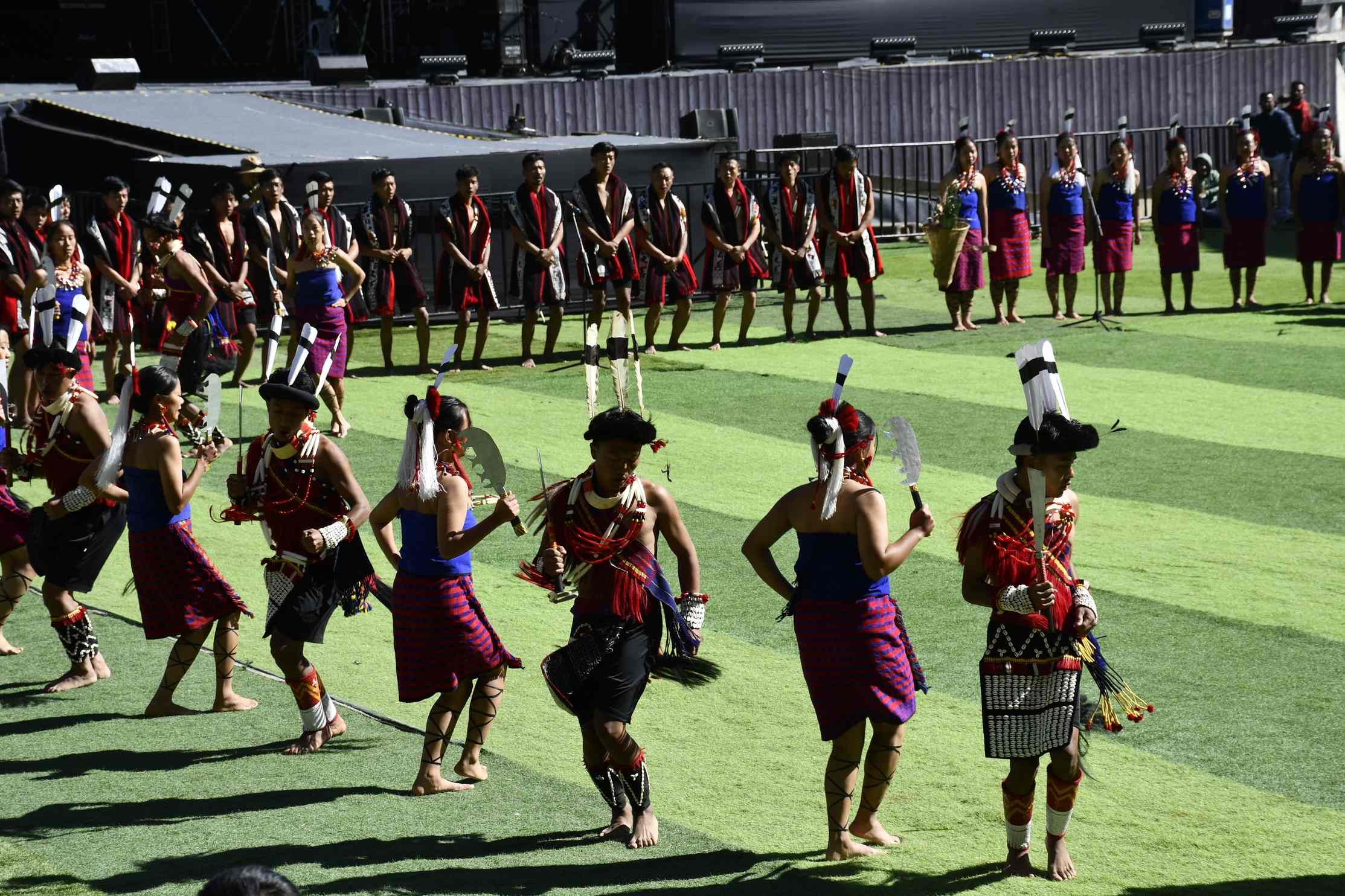
It starts low, almost like a distant thunder, and builds until it's inside your chest. Groups of warriors in full ceremonial regalia — hornbill feathers in their headgear, dao swords at their sides — move in rhythms that feel ancient and electric at the same time. You don't watch this. You absorb it.
I stood at the edge of one performance for nearly forty minutes, completely still, not checking my phone once. That has never happened to me at any other travel destination in India. That alone tells you everything.
16 Tribes, One Ground: How the Hornbill Festival Celebrates the Soul of Northeast India
What makes the Hornbill Festival unlike anything else in the country is its scale of diversity — brought together not as a display, but as a living, breathing reunion.
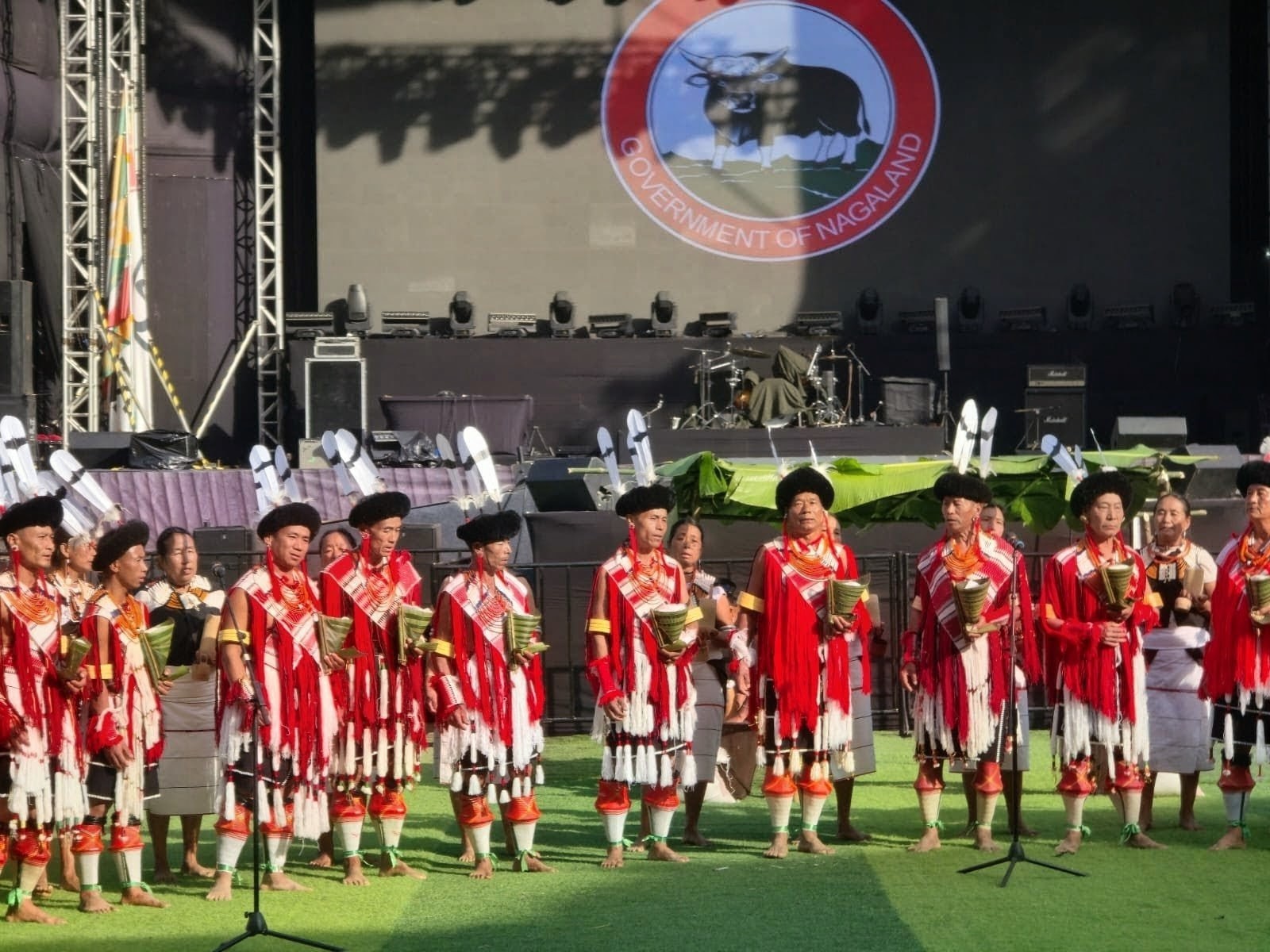
Northeast India travel exposes you to a part of the country that most Indians have never meaningfully experienced. Here, at Kisama, all of that comes into one extraordinary focus. The Angami, Ao, Chakhesang, Chang, Khiamniungan, Konyak, Lotha, Phom, Pochuri, Rengma, Sangtam, Sumi, Yimchunger, Zeliang, Kuki, and Dimasa tribes — 16 communities, each with their own language, dress, and story — share one ground for ten days every December.
You walk from one Morung to the next and it feels like crossing borders. Naga tribes traditions are not folklore. They are living codes — ways of understanding land, honour, community, and belonging that have survived for centuries.
The festival also includes traditional sports like Naga wrestling and spear throwing, local craft markets, and indigenous food stalls where you eat things you will absolutely not find on any Zomato menu. This is hidden India at its most generous and unapologetic.
The Food, the War Dances, the Fire — Sensory Moments at the Hornbill Festival That Stay With You Forever
Let's talk about the food first, because it deserves its own conversation.
Smoked pork with bamboo shoot. Anishi curry. Galho — a Naga rice and meat porridge that locals eat for breakfast and that will ruin you for all other comfort food. These dishes are served out of open stalls right on the festival grounds, cooked the way they have always been cooked — over wood fire, in iron pots, without apology.
Then there are the war dances.
The Konyak tribe's warrior dance is something I have no proper language for. Men in full battle regalia — tattooed faces, brass jewellery, hornbill feather crowns — move through formations that are simultaneously fierce and precise. It is not choreography. It is memory, made visible.
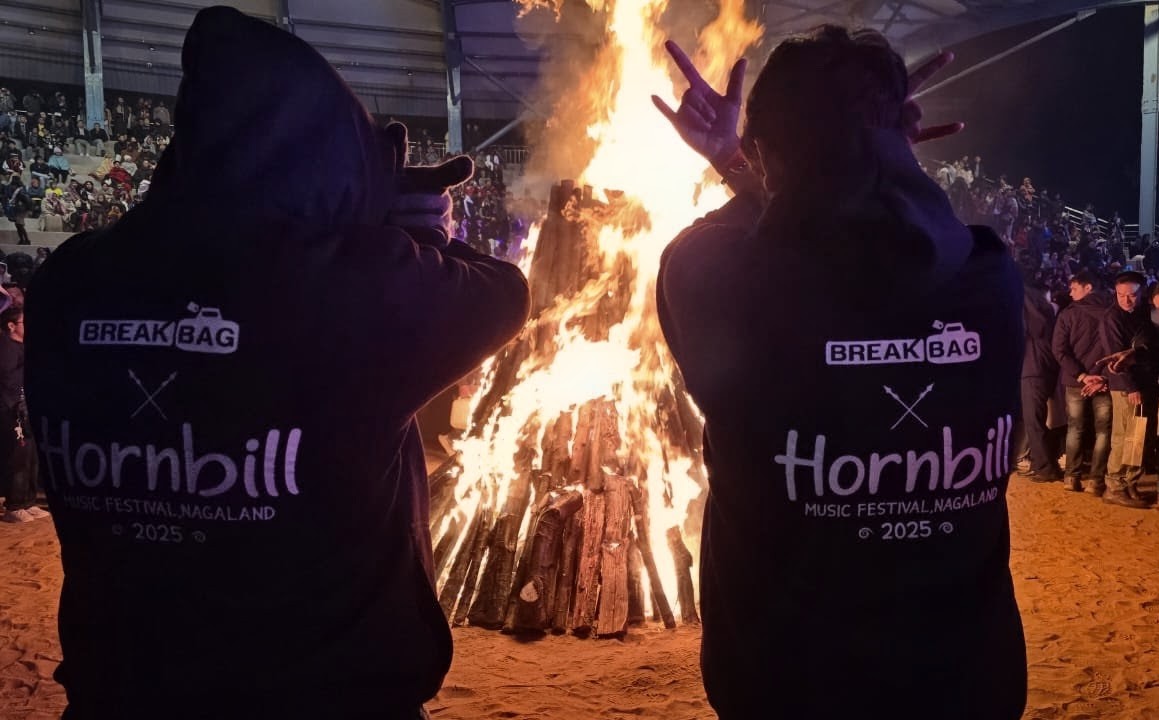
The evenings at Hornbill bring live music from Northeast India's remarkable indie scene — the Ziro Music Festival's spirit carries here too. Local and national artists perform against a backdrop of mountain darkness and festival firelight. This is what experiential travel in India actually means. Not a curated resort experience. Real life, in full colour.
Why Nagaland Felt Like a Different Country — and Why That's Exactly the Point of Travelling Northeast India
Here is the thing nobody tells you about travelling Northeast India: it will make you question every travel decision you have made before.
While the rest of us were doing the same Rajasthan circuit or the Manali-Kasol loop for the third time, an entire world was sitting here — quiet, extraordinary, and almost completely unvisited by mainstream Indian tourism.
Nagaland has no pollution. No tourist touts. No honking. The air in Kohima is the kind you notice because you realise you had forgotten what clean air feels like. People greet you with a directness and warmth that doesn't feel like hospitality training — it feels like genuine human welcome.
This is what offbeat India travel destinations promise and rarely deliver. Nagaland delivers.
The Naga people carry their identity with remarkable pride. Their churches, their markets, their music, their food — everything here is unapologetically itself. There is no performance of identity for the tourist gaze. You are simply allowed to witness something real.
That is what changed my view of India. Not what I saw. But the realisation of how much I had been missing.
What Going as a Group Did to This Experience — and Why Solo Just Wouldn't Have Been the Same
I want to be honest about this, because it matters.
I am someone who usually travels solo. I like the freedom. The spontaneity. The quiet. But this trip — this particular destination — was different, and going with a group made it richer in ways I did not anticipate.
Northeast India, and Nagaland specifically, requires Inner Line Permits for non-Nagaland residents. It involves paperwork, coordination, and local knowledge that can turn a dream trip into a logistics nightmare if you try to sort it alone. BreakBag Holidays handled every single permit and document for everyone in the group. We arrived knowing nothing about the bureaucracy because we didn't have to.
But beyond logistics, there was something deeper. Experiencing the Hornbill Festival next to people who were equally overwhelmed, equally underprepared, equally moved — that created a bond. We shared meals we couldn't name. We stumbled through translations together. We stood at the edge of that drumming circle together and didn't say a word.
Some travel is meant to be shared. This is one of those trips. If the Hornbill Festival group trip is on your radar, go with people who are as curious as you are. The experience multiplies.
If the Hornbill Festival in Nagaland Is on Your List — Here's the One Thing You Must Know Before You Go
Book early. Seriously.
The Hornbill Festival happens once a year — the first ten days of December — and it is not a secret anymore. Accommodation in and around Kohima fills up fast. Permits take time. And if you're flying from Kolkata, Delhi, Mumbai, Bengaluru, Hyderabad, or Chennai — flights to Dimapur need planning.
The one thing that made our trip seamless was going through BreakBag Holidays. Every detail — from the restricted area permits to accommodation to the Kisama entry — was handled. We showed up ready to experience, not to manage.
If you are tired of the same destinations and the same photographs and the same Instagram locations, Nagaland is your answer. The Hornbill Festival is your entry point. And December 2025 might be the year you finally stop scrolling through other people's Northeast India travel stories and start living your own.
You can explore BreakBag's Hornbill Festival Opening Ceremony 2026 trip or the Hornbill Festival Closing Ceremony 2026 package — both are mid-range, comfort-first group departures with everything sorted.
The drums are already playing. The only question is whether you'll be there to hear them.
"The best stories aren't the ones you collect alone. They're the ones you turn to someone beside you and say — did that just really happen?"
Similar Destination
Looking for a hassle free trip?
Connect with our experts! Get the best Itineraries and Offers!