


Ziro Festival History: The Story Behind India's Greatest Eco-Festival
Picture a valley in 2012. No stage lights, no ticketing app, no crowd of thousands. Just a wide bowl of paddy fields in a corner of Arunachal Pradesh most Indians couldn't point to on a map, a handful of bamboo poles lashed together, and two musicians betting that people would actually travel here — to the far edge of the Northeast — for music.
They were right. That bet became the Ziro Festival, and the story of how it grew from that muddy, uncertain first edition into what many now call India's greatest eco-festival is honestly one of the best travel stories in the country.
Most people discover Ziro through a lineup poster or a friend's photos of golden rice fields. Few know how it actually came to be — the founders, the community that made it possible, the deliberate choices that kept it small and soulful while every other festival chased scale. So before you book your Ziro Festival 2026 trip, let me tell you where it all came from. It makes the whole thing land differently once you're standing in that valley.
The Origins of Ziro Festival: How It All Began in 2012
The Ziro Festival origins trace back to 2012 — but the idea was brewing long before that first edition.
Here's the thing that's easy to forget now: in the early 2010s, Arunachal Pradesh barely registered on India's travel map. Getting there meant permits, bad roads, and a long haul most tourists wouldn't attempt. The idea of a music festival in a remote Apatani valley sounded, frankly, a little mad.
That's exactly what made it work.
The first Ziro Festival of Music was raw. Small crowds, rough infrastructure, a lineup built more on passion than star power. The roads were terrible, the terrain remote, and the financial hurdles real. But something clicked. The people who made the journey didn't feel like they'd attended a concert — they felt like they'd stumbled onto a secret. Word spread quietly, the way the best things do, through people who'd been and couldn't stop talking about it.
By 2018, that scrappy experiment had grown into a much-anticipated annual gathering, known across the indie world for its vibe and its intimate setting among Arunachal's green hills. What began as a music festival was quietly becoming a cultural pilgrimage.
The Founders Behind Ziro Festival: Bobby Hano & Anup Kutty's Vision
Every good story has people at the centre, and Ziro's are two names worth knowing: Bobby Hano and Anup Kutty.
Anup Kutty is a guitarist from the Delhi rock band Menwhopause — a musician who understood the indie scene from the inside and saw how few real platforms existed for independent artists in India. Bobby Hano, a local from Ziro, brought the ground knowledge, the community ties, and the belief that his home valley could be the setting for something special.
Together, in 2012, they built the Ziro Festival founders' vision into reality: a festival that put emerging Northeast talent and independent music on the same stage, in a place that was as much the point as the music itself.
What makes their vision stand out — and what's kept the festival honest for over a decade — is what they didn't do. They didn't chase the biggest headliners. They didn't scale it into a mega-event. They chose the music carefully, they chose the setting deliberately, and they chose to keep the Apatani community at the heart of it rather than treating the valley as a backdrop. Fourteen years on, that restraint is exactly why Ziro still feels like Ziro — and not like every other festival that got big and lost its soul.
Why Ziro Valley? The Story of India's Greatest Eco-Festival's Home
Of all the places in India to build a festival, why here? Why a remote valley at 5,500 feet in the Lower Subansiri district? The answer is the reason India's greatest eco-festival could only ever have happened in Ziro.
Stand in the valley once and you understand. It's a wide, open bowl of terraced rice fields, ringed by pine-covered ridges, dotted with traditional Apatani villages. In late September, when the festival runs, the paddy glows gold-orange right before harvest, the air turns crisp from the tail of the monsoon, and the whole place looks more like a painting than a venue.
But it's not just beauty. The founders chose this setting as deliberately as they chose the music. The Apatani Cultural Landscape that frames the festival is now on UNESCO's Tentative World Heritage List, recognised for its remarkable blend of indigenous agriculture, architecture, and community stewardship. This is a place where people have farmed the same terraced fields sustainably for generations.
That heritage isn't decoration — it's the festival's foundation. Ziro Valley didn't just host a festival. It shaped what the festival became: rooted, sustainable, and impossible to separate from the land and people that make it. You can't copy-paste Ziro somewhere else. The valley is the festival.
The Apatani Community: The Heart of Ziro Festival History
You can't tell the real Ziro Festival history without the Apatani people — because without them, there's simply no festival.
The Apatani are an indigenous community of the Ziro Valley, long known for their extraordinary closeness to nature and one of the most sustainable traditional farming systems in the world. Their wet-rice cultivation, where they farm fish and rice together in the same terraced paddies, is studied by agriculturalists globally. This is a community that understood sustainability centuries before it became a buzzword.
From the very beginning, the festival was hosted by members of the Apatani tribe — not just permitted to happen on their land, but genuinely run with them. Locals host attendees. Community members are trained and employed to produce the festival. Local artisans build the bamboo infrastructure by hand.
This is what makes Ziro fundamentally different from a festival that simply rents a field. When you attend, you're a guest in someone's home — welcomed into Apatani village life, fed local food, shown a way of living that most of urban India has forgotten. The rice beer shared at a bonfire, the smoked pork at a roadside stall, the morning walk through a village where life moves at its own pace — these aren't festival add-ons. They're the community opening its doors. And that generosity, sustained year after year since 2012, is the beating heart of the whole story.
How Ziro Festival Grew Into India's Greatest Eco-Festival
The rise of India's greatest eco-festival wasn't an overnight explosion. It was a slow, steady climb — which is exactly why it lasted.
Through the 2010s, Ziro grew by word of mouth more than marketing. Each edition, a few more travellers made the long journey and went home converts. By 2018, it had become a firm fixture on the indie calendar. Over the years it evolved from a pure music event into a broader cultural celebration — adding nature walks, butterfly trails, yoga sessions, and village explorations, making it more immersive and welcoming to families and first-timers alike.
Crucially, it became a serious driver of tourism for Arunachal Pradesh — today it's the largest non-pilgrimage, tourist-drawing event in the state. For a region long overlooked by mainstream Indian tourism, that's no small thing. Ziro helped put the Northeast on the map for a whole generation of travellers, many of whom made their first-ever trip to the region because of it, then kept coming back for everything else the Northeast offers.
And it did all this while staying true to its roots. It grew in reputation without ballooning in scale or selling out its soul. That balance — bigger in fame, unchanged in spirit — is the hardest thing for any festival to pull off, and it's precisely what earned Ziro its reputation as India's greatest eco-friendly outdoor festival.
Music, Bamboo & Sustainability: What Makes Ziro Festival Unique
Strip away the scenery for a second and here's what genuinely sets Ziro apart: it might be the most eco-friendly festival in the country, and it's not a marketing gimmick — it's built into everything.
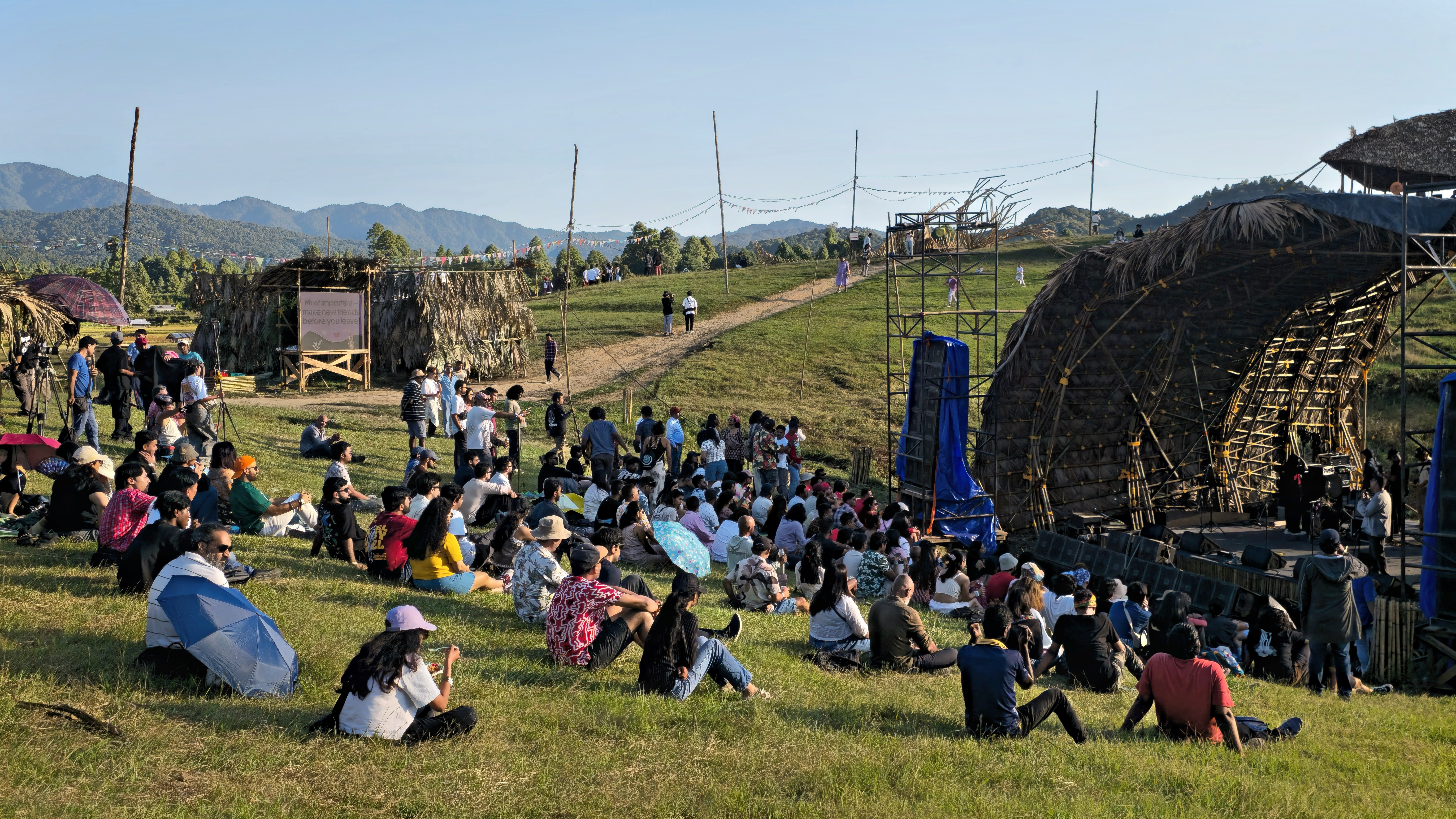
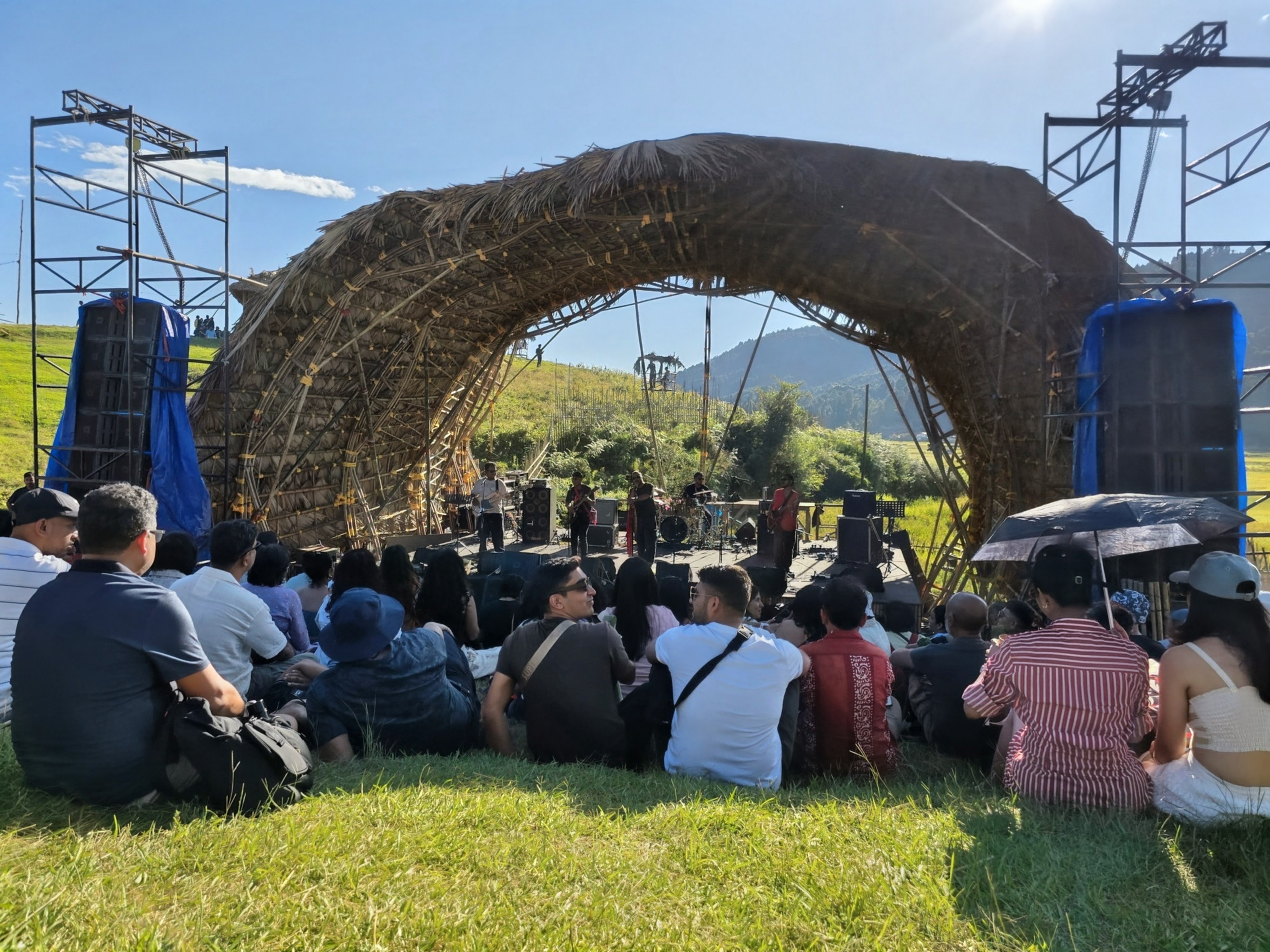
Start with the stages. The festival's infrastructure is made almost entirely from locally-sourced bamboo, built by local artisans. When the festival ends, there's no mountain of steel and plastic left behind. The three stages — Danyi (Sun), Pwlo (Moon), and Takvr (Star) — each carry their own sonic identity, from indie folk and classical fusion to deep electronic sets under the stars, all rising from the earth in bamboo rather than scaffolding.
Then there's the community model. The festival runs skills-training programs that empower Apatani community members to be actively involved in producing the event, and it employs local people throughout. The money and the opportunity stay in the valley.
Musically, it's always been about discovery over commercial popularity. The carefully-curated lineup brings together over 40 independent acts from the region, the country, and the world — a mix of genres spanning indie rock, folk fusion, electronic, and experimental, performed by both emerging and established artists. You go to most festivals to see bands you already love. You go to Ziro to find the ones you'll love next. That, plus the bamboo, plus the community, is the unique formula no other Indian festival has managed to copy.
Legendary Artists Who Shaped the Ziro Festival Story
Over more than a decade, the Ziro stage has hosted an eclectic roll-call of artists that tells you everything about the festival's taste — and shaped the Ziro Festival story into what it is.
The Ziro Festival lineup across the years has ranged from raw indie discoveries to genuine legends. Early editions featured names like Indus Creed and Rewben Mashangva. Over time the stage welcomed the likes of Lee Ranaldo and Steve Shelley of Sonic Youth, Peter Cat Recording Co., Guru Rewben Mashangva, Barmer Boys, Bipul Chettri, Taba Chake, Lifafa, Swarathma, Shilpa Rao, Guitar Prasanna, and Guy Buttery — an extraordinary spread of Northeast Indian talent, national indie powerhouses, and international acts.
What's telling is the mix. A globally renowned experimental guitarist might share the weekend with a folk musician from a Northeast village few have heard of — and the crowd embraces both equally. That's the Ziro spirit: the stage treats a legend and an unknown with the same respect, because the festival was always about the music, not the fame attached to it.
For 2026, the full lineup is still to be announced — it rolls out in phases over the months before the festival — but if history is any guide, expect the same signature blend of the celebrated and the yet-to-be-discovered.
Ziro Festival Today: From Humble Roots to a Global Music Pilgrimage
So where does the story stand now? The Ziro Festival 2026 returns to Ziro Valley from September 24 to 27 — thirteen-plus years on from that scrappy first edition, and utterly transformed in reputation while remarkably unchanged in soul.
Today, Ziro is consistently ranked among the top outdoor music festivals in Asia. It draws a loyal, globe-trotting crowd — the kind who plan their year around it and treat the trip as an annual pilgrimage. For many, it's still the reason they make their first journey to Northeast India, and the valley has a way of keeping them coming back.
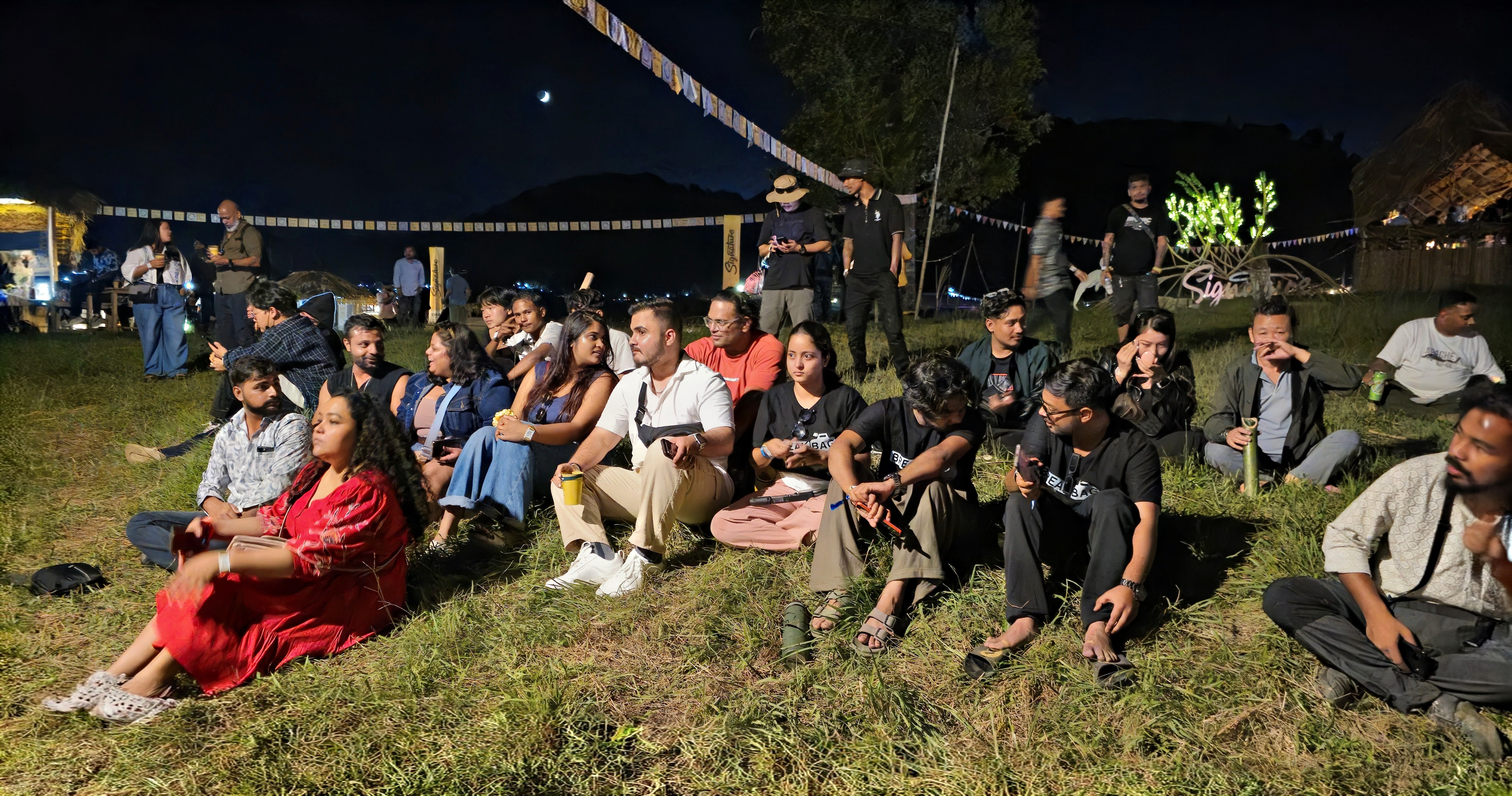
But walk the grounds and it still feels like the festival the founders imagined. Bamboo stages. Apatani hosts. Music you've never heard drifting across paddy fields. Bonfires and strangers-turned-friends. The crowds got bigger and the name got famous, but the heart stayed exactly where it started — in a hidden valley, with a community that opens its home for four days each September.
That's the whole story, really. Not a corporation that built a festival, but a place and its people who welcomed the world in — and did it their way. Once you know that, attending Ziro stops being a trip and starts being something closer to joining a tradition.
Want to Be Part of the Story?
Reading about Ziro is one thing. Standing in that valley — bamboo stages glowing, music drifting over the paddy fields, an Apatani grandmother handing you a cup of rice beer — is another entirely. If this story stirred something, let us help you live it. Tell us your city and dates, and we'll build you a Ziro Festival 2026 trip with travel, stay, and permit all sorted.
[Enquire about BreakBag's Ziro Festival 2026 trip →]
"Ziro isn't a festival someone built — it's a valley that opened its doors, and never quite closed them again."
Looking for a hassle free trip?
Connect with our experts! Get the best Itineraries and Offers!